
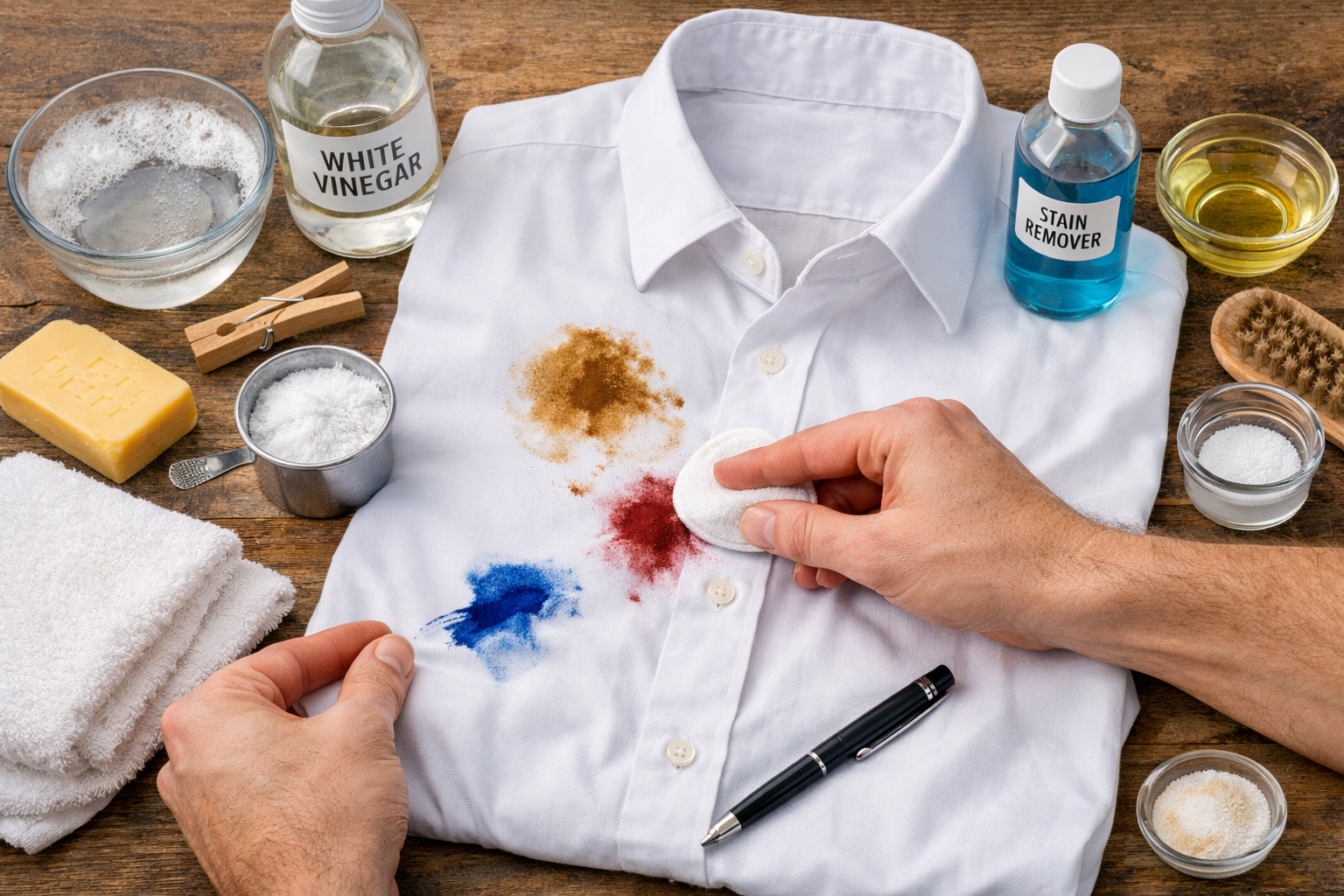
How to Remove Tough Stains: A Complete Professional Guide to Protect Your Garments
How to remove tough stains is one of the most common concerns in garment care and fabric maintenance. Even the most expensive and high quality clothing is not immune to accidental stains. From a spilled cup of coffee during a busy morning to an unexpected ink mark on a business shirt, stains can quickly turn a perfect outfit into something difficult to wear.

The real challenge when learning how to remove tough stains is not only eliminating the mark itself but also protecting the integrity of the fabric. Different materials react differently to cleaning solutions, temperature and friction. Using the wrong technique may permanently damage delicate fabrics, fade colours or weaken fibres.
Understanding the correct stain removal process allows you to maintain the appearance, longevity and quality of your wardrobe. In this professional guide we explain how to remove tough stains safely, which techniques work best for different stain types, and how to treat fabrics without causing additional damage.
Why Tough Stains Are Difficult to Remove
Before learning how to remove tough stains, it is important to understand why certain stains become difficult to clean.
Many stains bond with fabric fibres at a microscopic level. Liquids penetrate quickly into textiles and can chemically react with fibres. Once this happens, ordinary washing is often not enough to remove the mark.
Several factors influence how stubborn a stain becomes:
- Type of fabric
- Type of stain substance
- Temperature applied to the stain
- Time passed before treatment
- Incorrect cleaning methods
For example, heat can permanently fix some stains into fabric fibres. This is why professional garment care specialists emphasise immediate and proper treatment when considering how to remove tough stains effectively.
Essential Principles Before Attempting Stain Removal
Before applying any cleaning solution, a few professional principles should always be followed. These steps are crucial when learning how to remove tough stains without damaging clothing.
First, always identify the type of stain and the fabric material. Delicate fabrics such as silk, wool and cashmere require different treatment compared to cotton or polyester.
Secondly, act quickly whenever possible. Fresh stains are significantly easier to remove than dried or aged stains.
Another important rule when studying how to remove tough stains is to test any cleaning product on a hidden area of the garment first. This prevents unexpected colour fading or fibre damage.
Finally, avoid aggressive rubbing. Friction can spread the stain deeper into the fabric and may damage delicate fibres.
How to Remove Tough Stains from Protein Based Substances
Protein based stains include blood, sweat, milk, eggs and other organic materials. These stains require careful handling because heat can cause the proteins to coagulate and permanently attach to fibres.
When learning how to remove tough stains caused by protein substances, cold water is always the safest first step.
Rinse the affected area gently with cold water from the reverse side of the fabric. This helps push the stain out of the fibres rather than deeper into them. A mild enzymatic detergent can then be applied to break down the protein structure of the stain.
Allow the detergent to sit for several minutes before gently blotting the area. In stubborn cases, a small amount of diluted white vinegar may help neutralise remaining residue.
Understanding these steps is essential for anyone researching how to remove tough stains from delicate garments without causing permanent damage.
Removing Beverage Stains from Clothing
Beverage stains such as coffee, tea, wine and soft drinks are among the most common problems in everyday garment care. These liquids contain pigments and tannins that can penetrate fibres quickly.
Acting immediately is one of the most important rules when learning how to remove tough stains from beverages.
Start by gently blotting the liquid using a clean cloth or paper towel. Avoid rubbing the stain because this spreads the pigments further into the fabric.
Once excess liquid is absorbed, rinse the area with lukewarm water and apply a mild detergent solution. Let the detergent work into the fibres before rinsing again.
For darker stains such as red wine or strong coffee, oxygen based stain removers can be effective when used carefully.
With the correct method, even stubborn beverage stains can be removed while preserving the quality of the fabric.
How to Remove Tough Ink Stains
Ink stains are particularly challenging because the pigments are designed to bond strongly with surfaces. Improper treatment often spreads the stain further instead of removing it.
When dealing with ink, controlled treatment is essential. Instead of rubbing, gently dab the stain using a cloth slightly dampened with rubbing alcohol or a specialised ink remover.
Place an absorbent cloth beneath the stained area so that the dissolved ink transfers downward instead of spreading across the garment.
Understanding how to remove tough stains like ink requires patience and careful blotting techniques. Repeating the process gradually lifts the pigment without damaging the fibres.
Removing Oil and Grease Stains
Oil based stains are common in kitchens, restaurants and daily life. Cooking oils, butter, cosmetics and mechanical grease can all create persistent marks on clothing.
Because oils repel water, they cannot be removed effectively with water alone. When researching how to remove tough stains caused by grease, a degreasing agent is necessary.
A small amount of dishwashing liquid can be applied directly to the stain because these detergents are specifically designed to break down fats. Gently work the solution into the fabric before rinsing with warm water.
For older grease stains, a second treatment may be required before laundering the garment normally.
Using the correct approach ensures the oil molecules are lifted from the fibres instead of spreading across the fabric.
Fabric Types and Why They Matter
Different fabrics react differently to stain removal methods. Understanding this difference is essential when learning how to remove tough stains safely.
Cotton and polyester are generally more durable and can tolerate stronger detergents and moderate temperatures.
Silk and wool, however, require far more delicate treatment. Harsh chemicals, hot water or aggressive scrubbing may damage the fibres permanently.
Luxury fabrics should always be treated with gentle cleaning products and minimal friction. In many cases professional dry cleaning services are the safest option.
This is why garment care professionals emphasise fabric identification before applying any stain removal technique.
When Professional Cleaning Is the Best Option
Despite knowing how to remove tough stains, some stains simply require professional expertise. Certain substances, such as dye transfer, paint, or deeply embedded oils, may not respond to household methods.
Professional cleaners use specialised solvents, stain identification systems and controlled cleaning processes that protect fabrics while removing difficult marks.
Seeking professional care is particularly recommended for:
- Designer garments
- Silk, wool or cashmere fabrics
- Wedding dresses and formalwear
- Structured suits and blazers
These garments often require precision cleaning to avoid altering their structure or texture.
Preventing Tough Stains in the Future
While learning how to remove tough stains is valuable, prevention is always the best strategy.
Proper garment care habits can significantly reduce the risk of permanent staining. Prompt attention to spills, regular garment maintenance and correct storage all help protect clothing.
Using napkins when eating, avoiding overfilled pens in pockets and treating small stains immediately can make a noticeable difference in preserving your wardrobe.
Clothing represents both financial investment and personal style, so protecting it with proper care techniques is always worthwhile.
Final Thoughts
Understanding how to remove tough stains requires knowledge, patience and the right approach for each situation. Different stains behave differently, and using incorrect cleaning methods may cause more damage than the stain itself.
By acting quickly, identifying the type of stain, and applying the correct treatment, it is possible to remove even stubborn marks while preserving the quality of the fabric.
Whether you are maintaining everyday clothing or caring for luxury garments, mastering the principles of how to remove tough stains ensures your wardrobe remains clean, elegant and long lasting.


No comment