

In-House Linen Care London – Hidden Costs Guide 2026 | Hampstead Garment Care
The Hidden Cost of In‑House Linen Care – Why London Businesses Lose Money Without Realising (2026 Guide)
In-House Linen Care London 2026 | Hidden Costs for Hotels, Airbnbs & Spas
In-House Linen Care London is a growing concern for hospitality operators trying to balance quality and cost. London’s hospitality industry in 2026 is defined by rapid shifts in guest expectations, rising regulatory pressure, and an economic environment that demands operational efficiency. Hotels, boutique guesthouses, Airbnbs, wellness spas, restaurants, and clinical facilities must consistently deliver high standards while controlling costs — a balance that is becoming increasingly difficult to maintain with each passing year.
Among the many operational decisions businesses face, one of the most debated is whether to wash linen in‑house or outsource to a professional service. While the idea of in‑house management appears cost‑effective, a deeper evaluation rooted in hospitality operations, energy economics, and textile science reveals a very different reality.
In‑House Linen Care London is frequently one of the least efficient, most expensive and most underestimated operational burdens within hospitality.
Much of this cost is hidden. Businesses often consider detergent, water, or the price of a domestic washing machine. But the actual financial impact emerges from energy inefficiencies, labour hours, increased linen turnover, machinery breakdowns, and hygiene limitations. This guide provides a complete picture, helping operators understand why outsourcing to Hampstead Garment Care results in long‑term savings, improved linen quality, and significantly reduced operational complexity.
1. In-House Linen Care London Costs: The Illusion of Saving Money
 At the surface level, the logic appears simple:
-
“We already have a washing machine.”
-
“Detergent is cheap.”
-
“Our team can handle the laundry between tasks.”
However, these points only account for what is visible up front —not the cumulative operational demands behind the scenes. Hospitality laundry is not just about washing and drying; it involves process flow, equipment capacity, hygiene standards, energy management, and textile preservation.
The hidden operational expenditure emerges through:
-
Rising electricity and gas usage
-
Labour hours diverted away from revenue‑generating tasks
-
Early mechanical failure from overuse
-
Increased linen replacement due to improvised techniques
-
Rewash cycles caused by poor hygiene or odour retention
-
Inefficient drying rates, especially under humid London conditions
When these variables are calculated holistically, even a small Airbnb, spa or clinic can lose £3,000–£12,000 per year — losses that are very rarely recognised because they accumulate quietly over months instead of appearing as a single line item.
2. In-House Linen Care London Equipment Problem – Why Domestic Machines Fail
 One of the most significant miscalculations in In‑House Linen Care London is the reliance on domestic washing machines and dryers. These machines are not built for continuous or high‑volume use. They are engineered for households that run 4–7 loads per week—not for hospitality environments that generate 20–50 loads per week.
Looking cheap up front does not mean being cost‑effective in the long term.
Domestic laundry equipment becomes extremely expensive when pushed beyond its intended capacity.
Common issues include:
-
Operating at up to 5× their intended workload
-
Dramatically shortened lifespan (14–20 months in hospitality vs. years in a home)
-
Higher energy consumption because they lack efficient extraction technology
-
Longer drying cycles due to excess retained moisture, especially in terry towels
A domestic dryer running five cycles per day can quietly increase electricity bills by £140–£220 per month, a cost that rarely gets attributed to laundry because it blends into total energy usage.
Commercial machines, on the other hand:
-
Extract far more water before drying
-
Use significantly less energy
-
Handle bulk loads without stress
-
Maintain performance for 5–10 years
However, the initial financial barrier pushes many small operators toward domestic appliances, inadvertently locking them into an expensive operational loop that continues year after year.
3. In-House Linen Care London & Textile Degradation: How Improper Washing Shortens Lifespan
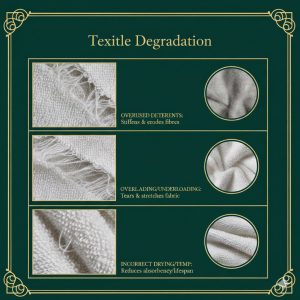 In hospitality, linen quality directly influences guest satisfaction. Rough towels, faded sheets and thinning robes are not just aesthetic problems — they are operational failures rooted in laundering methods. Most operators do not measure linen loss scientifically, but textile‑science research makes the pattern clear:
Up to 70% of hospitality linen replacement is due to improper washing and drying techniques.
In‑house systems — especially those using domestic washers and dryers — often damage textiles in ways that accumulate over repeated cycles:
-
Overuse of detergents leaves alkaline residue that stiffens and erodes fibres
-
Overloading increases mechanical abrasion, causing tears and premature thinning
-
Underloading increases whip force, stretching and distorting fabric structure
-
Incorrect temperatures accelerate fading, shrinkage and fibre fatigue
-
Household dryers overdry linen, breaking fibre bonds and reducing absorbency
-
Poor water extraction leaves towels heavy and damp, making them feel rough within weeks
The economic impact is substantial: linen that should last 12–18 months often needs replacement in 3–5 months, thereby multiplying annual replacement costs.
For spas and clinics that require white linen, visible deterioration occurs more quickly, creating a constant cycle of purchasing new stock.
4. In-House Linen Care London Labour Costs: The Most Underestimated Expense
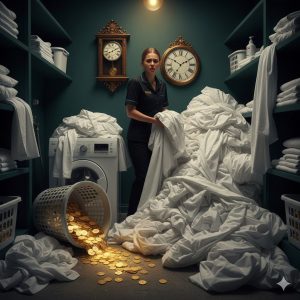 Labour is one of the highest operational expenses in London — yet many businesses underestimate the hours their staff spend performing laundry tasks.
A single laundry batch often includes:
-
30 minutes sorting and checking for stains
-
60 minutes of washing
-
60 minutes drying or multiple partial‑dry cycles
-
20 minutes folding, pairing or ironing
-
Interruptions, delays and handling time between loads
Total time: 2.5–3 hours per batch
Spas, salons and Airbnbs generating four loads per day quickly accumulate:
-
10–12 staff hours daily
-
£120–£150/day
-
£3,600–£4,500 monthly
-
£43,200–£54,000 annually
This labour cost is rarely allocated specifically to laundry — instead, it is absorbed into general wages, giving the illusion that in‑house laundry is “free.” In reality, businesses are paying premium London labour rates for staff to perform low‑efficiency, non‑specialised tasks.
This problem compounds further during peak seasons, when guest turnover increases, and staff spend even more time managing linen.
5. In-House Linen Care London Moisture Problems – How Climate Increases Costs
 London’s high humidity and cool climate create drying conditions that are far from ideal. Domestic dryers must work much harder to remove moisture from towels and bedding fully.
Humidity contributes to:
-
Extended drying cycles
-
Higher electricity consumption
-
Musty odours caused by incomplete drying
-
Bacterial growth within woven fibres
-
Increased rewashing because linen “doesn’t feel fresh” after drying
For businesses using drying racks or airing cupboards due to noise or space concerns, humidity presents even greater challenges:
-
Towels can take 8–12 hours to air‑dry
-
Slow drying increases the risk of mould spores
-
Rooms become humid, raising the load on HVAC systems
Most operators do not attribute these environmental consequences to laundry, yet the compounded energy and labour costs are high.
6. In-House Linen Care London Hygiene Gap – Why In‑House Systems Fail Standards
 In the hospitality and wellness sectors, hygiene is non‑negotiable. Yet most small businesses cannot meet the microbiological standards required for genuinely sanitised linen because domestic machines lack the necessary engineering.
In‑house laundry is typically unable to achieve:
-
Consistent thermal disinfection (e.g., 71°C for 3 minutes as per healthcare standards)
-
Ozone‑based sanitisation protocols that eliminate bacteria at low temperatures
-
Industrial‑grade extraction speeds guaranteeing minimal retained moisture
-
Precision dosing of detergents, softeners and enzymes
-
Controlled airflow drying that prevents microbial regrowth
This gap between “visually clean” and “clinically clean” has real consequences:
-
Persistent odours despite fresh washing
-
Higher guest complaints
-
Potential non‑compliance for clinics or wellness centres
-
Faster wear caused by incorrect pH or washing temperatures
Professional laundries, by contrast, use:
-
Programmable wash chemistry tailored to fibre type
-
Enzymatic pre‑treatments for oil‑based stains are common in spas
-
Thermal or ozone disinfection systems
-
Industrial extraction that removes up to 50% more water than domestic machines
-
Quality‑control inspection at multiple points
These processes ensure linen is both hygienically safe and preserved for long‑term use — a standard impossible to achieve consistently with in‑house domestic equipment.
7. Case Study: In-House Linen Care London Airbnb Example Losing £5,400 Annually
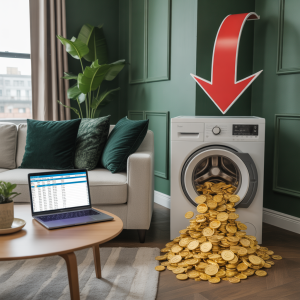 Consider a two‑bedroom, two‑bath Airbnb hosting guests year‑round. Daily laundry tasks quickly accumulate operational costs:
Annual expenditures:
-
Electricity for washing and drying: £1,200
-
Detergent, boosters, stain removers and supplies: £580
-
Linen replacement due to wear: £1,100
-
Domestic machine repairs/replacement: £700
-
Labour (3 hours/day × £12 × 365 days): £4,380
Total annual cost = £7,960
A professional laundry service costs £2,400–£3,000 per year, depending on volume and turnaround requirements.
Annual savings = £4,960–£5,560 — money that could be reinvested into property upgrades, guest amenities or marketing.
Yet many hosts continue to perform in‑house laundry, assuming it is the economical approach, when the numbers clearly show otherwise.
8. In-House Linen Care London Energy Costs – Why 2026 Will Be Even More Expensive
 London’s ongoing rise in energy tariffs is reshaping the financial landscape for all hospitality operators. Domestic dryers already consume 2–3 kWh per cycle, and when a business is running multiple loads each day, these costs escalate rapidly.
By 2026, in‑house laundry will become even more financially unsustainable due to:
-
Continued increases in peak‑hour electricity pricing
-
Higher maintenance and repair costs for overused domestic machines
-
Faster depreciation and more frequent equipment replacement
-
Growing pressure on businesses to meet stricter energy‑efficiency standards
Professional laundries distribute these costs across large‑scale systems, meaning individual clients benefit from significantly lower per‑load energy costs and no direct exposure to machine breakdowns or rising tariffs.
9. In-House Linen Care London & Hard Water – The Overlooked Cost Factor
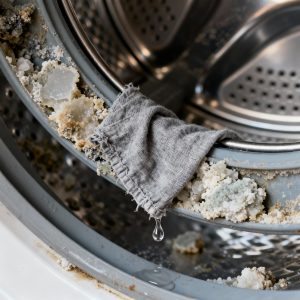 London’s water supply is categorised as “very hard,” containing elevated levels of calcium and magnesium. These minerals have a measurable impact on both linen and machine efficiency.
Hard water causes:
-
Reduced detergent effectiveness (requiring more chemical use)
-
Soap scum buildup inside fibres, leading to grey, rough towels
-
Accelerated fibre fatigue and premature material failure
-
Increased energy consumption due to inefficient heating and rinsing
-
More frequent rewashing cycles further raise labour and electricity costs
Professional laundry systems mitigate these problems through:
-
Industrial‑grade water‑softening technology
-
pH‑balanced detergents designed for fabric preservation
-
Precision‑calibrated rinse cycles for mineral removal
These systems produce softer, cleaner and longer‑lasting linen — outcomes that in‑house operations cannot replicate without costly equipment upgrades.
10. Why Outsourcing Linen Care Beats In-House Linen Care in London
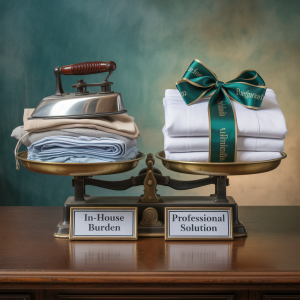 Evaluating laundry solely by “price per bag” is misleading. The actual cost of laundry includes multiple hidden operational factors that accumulate over time.
A proper cost assessment must consider:
-
Energy usage (washing, drying, rewashing)
-
Labour hours (sorting, washing, drying, folding)
-
Linen lifespan and replacement frequency
-
Downtime during machine failures or maintenance
-
Guest satisfaction and the impact of linen quality on reviews
-
Costs of detergents, stain removers and fabric‑care chemicals
-
Rewash cycles due to insufficient hygiene or odours
When these variables are considered holistically, outsourcing almost always emerges as the more economical, predictable, and operationally efficient solution for London businesses.
11. How Hampstead Garment Care Solves In-House Linen Care London Problems
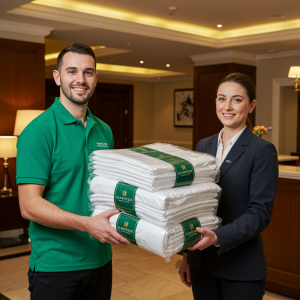 Hampstead Garment Care addresses each inefficiency identified above with systems designed explicitly for hospitality‑grade linen care. Our service model is designed to improve quality, reduce waste, and deliver long‑term financial stability for businesses.
We provide:
-
Commercial washing systems calibrated by textile specialists
-
Ozone and thermal disinfection for clinical‑level hygiene
-
Industrial drying that ensures complete moisture removal
-
Fabric‑specific chemistry for towels, sheets, robes and uniforms
-
Fast turnaround for hotels, spas, clinics and Airbnbs
-
A Linen Lifespan Protection Programme that reduces replacement rates
-
Transparent, predictable monthly pricing
-
Pickup and delivery across Greater London
Businesses that transition to us experience:
-
Immediate savings in labour and energy
-
Longer‑lasting linen with improved feel and performance
-
Reduced operational stress and enhanced workflow
-
Better guest satisfaction due to consistently high linen quality
Outsourcing is not simply a laundry decision — it is an operational upgrade.
12. Final Insight: 
Most businesses never fully understand the actual cost of in‑house laundry until they compare it directly with a professional service. When all variables are measured accurately — labour, energy, linen replacement, equipment depreciation, hygiene outcomes — the conclusion becomes unmistakable:
Professional laundry services provide superior financial, operational and hygiene results compared to in‑house systems.
With rising energy costs, increasing labour expenses and the accelerated wear of modern textiles, the cost gap between in‑house and outsourced laundry will only widen in 2026 and beyond.
Hampstead Garment Care supports London businesses by:
-
Reducing operational costs
-
Enhancing linen softness, cleanliness and durability
-
Removing the daily burden of laundry management
-
Ensuring reliable, guest‑ready hygiene standards
Actual savings don’t come from doing more in‑house — they come from doing laundry professionally, efficiently and scientifically.
Authoritative External Sources & Industry Standards
To strengthen the credibility and technical accuracy of this guide, the following authoritative organisations provide validated standards, research and regulatory guidance relevant to In‑House Linen Care London and professional laundry operations:
-
NHS England – Health Technical Memorandum (HTM) 01-04: Guidelines for the decontamination of linen in healthcare settings.
-
UK Health Security Agency (UKHSA): Infection prevention and control standards affecting laundry hygiene protocols. https:
-
CIBSE (Chartered Institution of Building Services Engineers): Data on energy consumption, ventilation and humidity impacts in commercial buildings.
-
Ofgem – UK Energy Regulator: Verified data on electricity tariffs, peak‑hour pricing and projected 2026 energy cost increases.
-
WRAP (Waste & Resources Action Programme): Research on textile lifespan, fibre degradation and sustainability impacts of incorrect washing.
-
The European Textile Services Association (ETSA): Industry benchmarks for professional laundry efficiency, hygiene and operational standards. https://www.textileservices.eu
These sources reinforce the operational, hygiene, and financial arguments presented throughout the guide, providing verifiable evidence for businesses aiming to reduce costs and increase efficiency in 2026 and beyond.



No comment