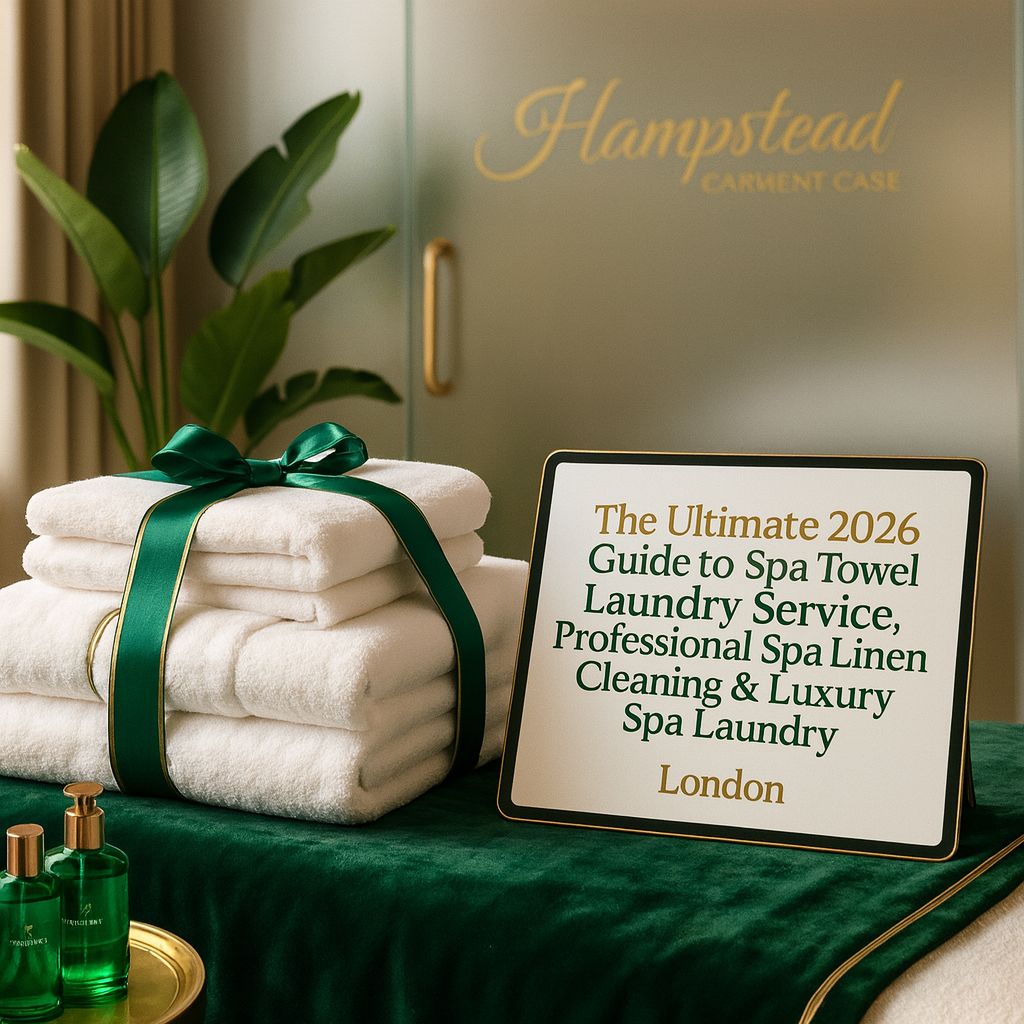
The Ultimate 2026 Guide to Spa Towel Laundry Service, Professional Spa Linen Cleaning & Luxury Spa Laundry London
Spa Laundry Services London | Professional Spa Towel & Linen Cleaning | Hampstead Garment Care
Spas are all about creating relaxing moments — a warm towel after a massage, a soft robe in the relaxation room, or a fresh sheet on a treatment bed. These small touches might look simple, but they strongly shape how clients judge a spa. In a busy city like London, where customers expect high standards and compare every detail, the quality of your towels and linens can influence reviews, reputation, and repeat bookings.
This is why services like Spa Towel Laundry Service, Professional Spa Linen Cleaning, Luxury Spa Laundry London, and Commercial Spa Laundry Hampstead are essential. Spas across Hampstead, Finchley Road, St John’s Wood, Belsize Park, Highgate, Swiss Cottage, Camden, and all of North West London depend on reliable, professional laundry care to keep their towels clean, soft, hygienic, and long‑lasting.
At Hampstead Garment Care, we’ve spent years building a laundry system designed just for spas. We use fabric science, strong commercial detergents, enzymes that break down oils, mineral‑controlled rinsing, and dryers that protect towel fibres. This 2026 guide will help you understand why spa laundry must be done professionally, how the cleaning process works, and how it helps your spa save money while delivering a better guest experience.
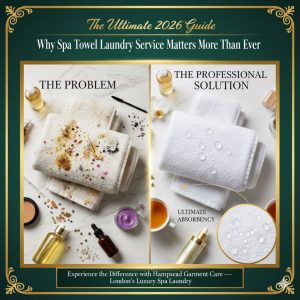
Why Spa Towel Laundry Service Matters More Than Ever in 2026
 Modern spas use more products and offer more treatments than they did in the past. From hot‑stone massage to aromatherapy, hammam rituals, and advanced facial skincare, today’s spa towels collect more oils, creams, and residues than regular household towels.
Many spa owners underestimate how much laundry they generate or how demanding spa towel care is. In a spa, a towel is not just a towel — it’s a multi‑purpose essential that affects both the client experience and the spa’s professional reputation. A towel serves several critical roles:
-
A hygiene tool – Towels create a clean, protective barrier between clients and treatment surfaces, helping prevent cross‑contamination.
-
A comfort item – Soft, warm towels help clients relax physically and mentally, especially during massages, facials, or body treatments.
-
A key part of the treatment experience: therapists rely on towels to wipe away oils, support limbs, cover the body, and maintain comfort throughout the session.
-
A significant part of your brand image: clean, bright, soft towels immediately communicate professionalism, luxury, and attention to detail, while rough or stained towels can instantly erode trust.
Spas Use Far More Towels Than Most People Realise
 A single therapist can use 10–15 towels per shift — and this is just the baseline. When you zoom out to view the entire spa operation, the numbers increase dramatically. Towels are pulled constantly throughout the day for different stages of treatments:
-
Towels to set up the room before the session
-
Towels used during the massage or facial
-
Towels used to wipe oils or skincare products
-
Towels are used to cover or reposition the client
-
Towels are used to clean the treatment table between clients
-
Fresh towels are required for the following setup
Once you multiply this by:
-
Several treatment rooms run all day,
-
Full‑day appointments with little downtime between clients,
-
Busy weekends when spas operate at full capacity,
-
Seasonal periods like winter, holidays, and special promotions,
-
Group bookings, couples’ treatments, and spa packages,
A mid‑sized spa efficiently uses:
-
200–300 towels per day – including face towels, body towels, cabinet towels, and bath sheets for showers or hydrotherapy.
-
50–80 robes and wraps – required for guests moving between treatments, relaxation areas, saunas, and changing rooms.
-
20–40 treatment bed covers – changed after every client to maintain hygiene and comfort.
-
Many headrest covers, bolster covers, and cabinet towels – these smaller items add up quickly because they must be replaced after each use for health and safety.
This is just the average. Large luxury spas in London — especially those offering hammams, hydrotherapy, saunas, steam rooms, and beauty treatments — may use 500–700 towels daily. During events, spa retreats, or peak seasons, even more are required.
Large London spas may use 500–700 towels daily, especially during holidays or wellness events.
Spa Laundry Is Not Like Normal Laundry
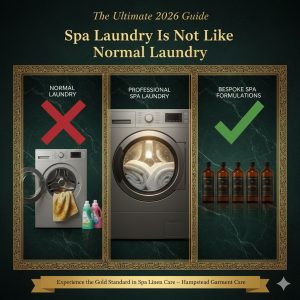 Spa laundry looks simple from the outside — it’s just towels, right? But in reality, spa towels are exposed to some of the harshest, most complex contamination of any textile. They absorb layers of oils, minerals, skin products, and body residues that ordinary laundry machines cannot remove.
To understand why spa laundry requires professional treatment, let’s break down the kind of substances spa towels come into contact with:
-
Heavy massage oils – These oils are thick, hydrophobic, and cling tightly to cotton. They coat the fibres like wax and resist regular detergents.
-
Essential oils (which oxidise and stain) – Essential oils react with heat and air, turning into yellow or brown stains that bond deeply into the towel.
-
Body butters and balms – These products contain fats and waxes that solidify inside towel fibres. Once hardened, they lock in odours and roughness.
-
Silicones from skincare products – Silicones create a thin, waterproof film on cotton loops, blocking water absorption and making towels feel slippery or stiff.
-
SPF and pigmented serums – Sunscreen contains minerals like zinc oxide and titanium dioxide, plus pigments that cling to fibres. These cause stubborn grey or beige patches.
-
Steam‑room minerals – Steam from saunas and hammams carries dissolved minerals. When they dry inside the towel, they form a gritty layer that no household machine can remove.
-
Exfoliation grains – Scrubs leave behind tiny sand-like particles that become trapped between the fibres, acting like abrasives.
-
Sweat, dead skin, makeup, wax – These organic residues mix with oils and minerals, forming a “soil shield” that surrounds the fibres.
Why is this combination so tricky to clean
Each of the substances above requires a different cleaning method:
-
Oils need enzyme breakdown.
-
Minerals need softened water and deep rinsing.
-
Silicones need high‑performance detergents.
-
Pigments need specialised stain removers.
-
Organic residues need sanitising temperatures.
A standard washing machine and supermarket detergent cannot handle this chemical complexity.
What happens when spa towels are washed like regular household towels
If spa towels are washed the same way as home laundry:
-
Oils stay trapped inside the fibres.
-
Towels quickly become stiff, grey, and dull.
-
Bacteria adhere to residual matter, causing sour odours.
-
Silicones and serums reduce absorbency.
-
Towels wear out in months instead of years.
This is why standard laundry methods don’t work well for professional spas — they’re not designed for the intense, layered contamination that spa towels undergo every day.
Why Normal Laundry Fails Spa Towels — The Science Explained Simply
Oil Buildup
Massage oils repel water. They sink deep into cotton loops and:
-
Block the detergent from cleaning properly
-
Trap dead skin and bacteria
-
Make towels feel greasy or heavy
-
Cause yellow stains that get darker over time
Mineral Damage from Steam Rooms
Towels used in steam or sauna areas pick up minerals like calcium and magnesium. These minerals make towels:
-
Hard
-
Scratchy
-
Stiff
-
Dull in colour
Silicone Residue
Skincare products contain silicones that coat the towel. This makes towels:
-
Less absorbent
-
Harder to wash
-
Slippery or rough
Oxidation Stains
Oils, SPF, and sweat can darken or yellow when exposed to heat in washing or drying cycles.
This is why Professional Spa Linen Cleaning uses enzyme detergents, deep rinsing, and controlled temperatures.
Common Problems When Spas Don’t Use Professional Cleaning
1. Sour or Musty Smells
Bacteria hide inside oily fibres and remain even after low‑temperature washes. Here’s why this happens and why it’s such a big problem for spas:
-
Oil traps bacteria – Massage oils, body butters, and skincare products create a greasy layer on the cotton loops. This oily layer protects bacteria from being washed away.
-
Low‑temperature washing isn’t enough – Many laundries use 30–40°C washes. At these temperatures, bacteria can survive easily. They stay trapped inside the towel and multiply.
-
Moisture makes it worse – When a towel isn’t thoroughly dried or is stored while slightly damp, bacteria grow even faster. This creates strong musty or “wet dog” smells.
-
Hard water contributes – Minerals in London’s hard water stick to fibres and trap bacteria even deeper, making the smell return right after washing.
-
Steam‑room towels are especially affected – Towels used in saunas and steam rooms collect sweat and moisture, creating the perfect environment for bacterial growth.
Why this matters for spas
A sour towel can ruin the entire treatment experience. Even if the therapist is excellent, a bad‑smelling towel makes the client feel uncomfortable and doubtful about hygiene.
How professional cleaning solves this
-
High‑temperature washes kill bacteria instead of masking the smell.
-
Enzyme treatments break down the oily film, exposing bacteria so they can be washed away.
-
Deep rinsing with softened water removes residue that traps odours.
-
Moisture‑sensor drying stops dampness, preventing new bacteria from growing.
This is why professionally cleaned towels come out smelling fresh, neutral, and “spa‑clean” — not musty or sour.
2. Hard, Scratchy Towels
Hard, scratchy towels are one of the most common complaints in spas — and they happen for reasons that many people don’t realise. A towel can look perfectly clean but still feel rough against the skin because of what’s happening deep inside the fibres.
Here’s a deeper explanation of the real causes:
-
Hard water – London’s water is full of minerals like calcium and magnesium. These minerals cling to cotton fibres during washing and drying. Over time, they create a stiff, sandpaper‑like texture. Even fresh towels can feel rough if washed in hard water without a softener.
-
Cheap detergents – Low‑quality detergents don’t fully dissolve oils and products. Instead, they mix with minerals and become trapped in the cotton loops. This residue dries into a hard film, making the towel feel stiff.
-
Overdrying – Excessive heat collapses cotton fibres and burns them. When towels are dried too long or at too high a temperature, they lose their natural softness and become thin, crispy, and rough.
-
Mineral residue – Towels used in steam rooms or saunas often absorb minerals released from steam pipes, tiled surfaces, or water droplets. When these minerals dry inside the fibres, they create a gritty feel and reduce softness.
-
Lotion and product buildup – Body lotions, massage creams, scrubs, and oils solidify when they cool. If they’re not removed effectively with enzyme treatment, they build up inside the towel, making the fibres stiff. Over time, this becomes a thick layer that blocks softness and absorbency.
Why are hard towels such a problem for spas
Clients expect spa towels to feel soft, cloud‑like, and comforting. A rough towel instantly disrupts the relaxing experience and can make a treatment feel low‑quality, even if everything else is perfect.
How professional spa laundry prevents this
-
Softened water stops mineral buildup
-
Enzyme detergents dissolve oils and lotions completely
-
Moisture‑sensor drying prevents heat damage
-
Deep rinsing removes every trace of residue
This is why professionally laundered towels feel consistently soft — treatment after treatment, day after day.
3. Yellow, Grey, or Brown Stains
These stains result from a combination of deeper chemical reactions within the fibres, and once they appear, they are challenging to remove without professional techniques.
Here’s a more detailed breakdown of why these stains happen:
-
Oil oxidation – Massage oils, essential oils, and SPF products contain ingredients that oxidise when exposed to heat or air. This oxidation turns into yellow or brown stains, especially around the edges of towels.
-
Makeup residue – Foundations, bronzers, and tinted serums contain pigments that adhere to the skin. These pigments also stick to towels and bond tightly to cotton fibres, creating grey or beige patches.
-
Steam minerals – Steam rooms and saunas release tiny mineral particles, such as calcium, magnesium, and iron. When towels absorb these minerals, they leave grey, rusty, or dull marks.
-
Poor rinsing – If detergent, oils, or minerals are not rinsed out properly, they bake into the fabric during drying. Over time, this forms darker, hardened stains that look dirty even after washing.
Why these stains are a big problem for spas
Clients associate stains with poor hygiene — even if the towel is technically clean. A single yellow patch can make a client lose trust in your spa’s standards.
How professional spa laundry prevents these stains
-
Enzyme pre-treatment breaks down makeup and oils before washing.
-
Oxygen-based brighteners restore whiteness safely.
-
Softened water prevents mineral deposits from attaching to fibres.
-
Deep rinse cycles remove residue entirely.
-
Controlled drying stops stains from setting permanently.
That’s why spas that use professional laundry services have towels that stay bright, clean-looking, and completely stain-free.
4. Towels Wearing Out Too Fast
Spa towels live a hard life — far more complex than the average household towel. They’re used multiple times a day, exposed to heavy oils, washed at high temperatures, dried repeatedly, and often stored tightly. Without proper cleaning, this constant cycle of use and washing causes towels to break down much faster than they should.
Here’s a deeper explanation of why towels wear out so quickly and how professional care stops it:
Why Towels Thin Out Quickly
Cotton fibres weaken when:
-
Oils and creams remain trapped inside the loops
-
Towels are washed in hard water (minerals break fibres)
-
Overdrying burns or crisps the cotton
-
Cheap detergents leave residues that stiffen fibres
When fibres weaken, the towel becomes thin, patchy, and flat — losing that soft, plush feel.
Why Towels Lose Softness
Softness disappears because:
-
Cotton loops collapse when overheated
-
Minerals attach to the fibres and harden them
-
Oils mix with dust and create a sticky film inside the fabric
-
Rinsing isn’t strong enough to remove product buildup
This is why towels washed at home often feel older after just a few cycles.
Why Towels Lose Absorbency
Absorbency drops when:
-
Oil residue coats the cotton loops
-
Silicones from skincare products block water absorption
-
Detergent residue clogs the fibre surface
-
Minerals from hard water create a stiff layer around the loops
A spa towel that can’t absorb water properly is uncomfortable for clients and frustrating for therapists.
Why Towels Tear or Fray
Edges and seams fray when:
-
The fabric dries out too much due to overheated dryers
-
Cotton becomes brittle from repeated high heat
-
Fibres are weakened by trapped oils and minerals
-
Towels are folded roughly or stored too tightly
Why Towels Look Old Within Months
Even if the towel isn’t fully damaged, it can appear old because:
-
Oils darken the cotton over time
-
Fibres flatten and lose fluff
-
Grey or yellow tones develop from oxidation
-
Excessive linting makes the towel look faded
How Professional Cleaning Fixes These Problems
Professional spa laundry protects towels at the chemical and fibre level by:
-
Using enzyme treatments to break down oils completely
-
Washing with softened water that prevents mineral damage
-
Using controlled heat to protect cotton fibres
-
Running deep rinse cycles that restore softness
-
Using moisture‑sensor drying to avoid overheating
-
Inspecting every towel for signs of wear before returning it
The result? Towels stay soft, firm, fluffy, and spa‑worthy for far longer — saving your business money and protecting your brand image.
How Hampstead Garment Care Cleans Spa Towels — The 2026 Professional Method
 Our spa laundry process is explicitly designed for heavy‑use, high‑soil towels.
Step 1: Enzyme Pre‑Treatment
Enzyme pre-treatment is one of the most critical steps in the entire spa laundry process. Enzymes are natural proteins that act like tiny chemical scissors. Each enzyme targets a specific type of dirt or residue commonly found on spa towels. This is extremely important because spa linens collect a wide variety of contaminants that regular detergents cannot break down on their own.
Here’s what the enzymes target and why it matters:
-
Oils – Massage oils and aromatherapy oils are hydrophobic (they repel water). Enzymes break these oils apart so they can be washed out instead of clinging to the cotton.
-
Creams & Body Butters – These products often contain waxes, fats, and heavy moisturisers. Enzymes dissolve them so they don’t harden inside the towel fibres.
-
Silicones – Found in skincare and hair products. Silicones coat fibres and block absorbency, so enzymes help remove that coating.
-
Makeup – Makeup pigments bond tightly to fabric. Specialised enzymes break down the proteins and oils in makeup, so stains lift more easily.
-
SPF & Serums – Sunscreens contain oils and minerals that cling to fabric, causing yellowing. Enzymes break these into smaller particles that detergents can remove.
-
Protein‑based residues – These include sweat, skin cells, and residues from body treatments. Protein enzymes (proteases) are specifically designed to break these down.
Why is this step essential for spas?
This pre-treatment phase removes 40–70% of the soil load before the main wash even starts. Without enzymes:
-
Oils stay trapped inside the cotton loops
-
Towels develop a greasy or stiff texture
-
Bacteria survive easier
-
Towels turn yellow or grey faster
-
Odours return within hours of drying
-
Absorbency drops with every wash
By using enzyme pre-treatment, the towels enter the primary wash cycle already broken down at the microscopic level. This is why professional spa laundry results in softer, brighter, and more hygienic towels compared to home washing or low‑grade commercial systems.
Step 2: High‑Temperature Wash (60–90°C)
A high‑temperature wash is one of the most critical steps in professional spa laundry because it tackles the types of dirt, bacteria, and oils that low‑temperature household cycles can’t remove. Washing at 60–90°C isn’t just about making towels look clean — it’s about ensuring proper hygiene and fibre restoration.
Here’s a deeper explanation of what this step does and why it matters:
-
Kills bacteria – Spa towels come into contact with sweat, skin cells, massage oils, and sometimes even minor skin abrasions. High heat destroys bacteria, mould spores, and microorganisms that can survive at lower temperatures. This is essential for maintaining spa hygiene and preventing sour smells.
-
Dissolves oils – Many spa oils (like coconut oil, jojoba oil, and essential oils) solidify at room temperature. Heat melts these oils, allowing them to be thoroughly washed out. At lower temperatures, these oils can become trapped in the cotton loops, making towels feel greasy or stiff.
-
Activates strong detergents – Commercial detergents contain ingredients that only activate at higher temperatures. Heat increases their cleaning power, allowing them to break down heavy massage balms, SPF, makeup, wax, and silicones.
-
Removes steam‑room minerals – Towels used in hammams, steam rooms, and saunas often absorb minerals such as calcium and magnesium. Heat helps dissolve mineral deposits so they can be rinsed out thoroughly, preventing stiffness and grey or yellow patches.
In short, high‑temperature washing restores towels from the inside out. It doesn’t just surface‑clean them — it resets them, making sure every customer gets a towel that is soft, hygienic, and ready for the subsequent treatment.
Step 3: Deep Rinsing With Softened Water
Deep rinsing is one of the most overlooked — yet most important — steps in professional spa laundry. Many people assume rinsing is just a quick final wash, but for spa towels, this stage determines how soft, bright, and comfortable the fabric will feel when a client uses it.
Here’s a deeper explanation of why softened water matters and how it transforms towel quality:
Why is soft water essential for spa towels
London has very hard water, meaning it contains high levels of minerals like calcium and magnesium. These minerals stick to cotton fibres during washing and drying. When this happens, towels become:
-
Stiff
-
Scratchy
-
Heavy
-
Dull-looking
-
Less absorbent
Softened water removes these minerals before they can attach to the fabric.
How deep rinsing improves towel texture
A deep rinse cycle uses multiple rinse stages with soft water. This ensures that:
-
Every trace of detergent is removed
-
Oil residue doesn’t get baked into fibres during drying
-
No mineral film remains on the towel surface
-
Cotton loops stay open and fluffy instead of clumping together
This is especially important for spa towels, which come into contact with the client’s face, neck, and body — some of the most sensitive areas.
Why spa towels get stiff without proper rinsing
If rinsing is not done thoroughly:
-
Detergent residue dries into the fibres
-
Oils mix with minerals and harden
-
Cotton loops collapse and feel rough
-
Towels lose their soft, cloud‑like texture
This is one of the main reasons towels washed at home or in basic laundries feel harsh, even when they smell clean.
How softened water protects the lifespan of towels
Mineral buildup doesn’t just affect softness — it damages fabric over time. Hard water can:
-
Break cotton fibres
-
Create grey or yellow patches
-
Reduce absorbency
-
Shorten towel life by up to 40%
With deep rinsing and softened water, towels stay bright, flexible, and durable for much longer.
In short, deep rinsing with softened water ensures that every towel leaving Hampstead Garment Care feels freshly restored — soft, lightweight, and comfortable enough for even the most luxurious spa treatments.
Step 4: Moisture‑Sensor Drying
Moisture‑sensor drying is one of the most advanced and protective parts of the spa laundry process. Instead of using a basic timer, our dryers measure the exact moisture level in the towels and automatically adjust the heat, airflow, and drying time. This prevents the two biggest dangers to spa towels: overdrying and under‑drying.
Here’s why this step matters so much:
Why overdrying ruins towels
Overdrying is one of the fastest ways to damage spa towels. When a dryer stays hot for too long:
-
Cotton fibres become brittle and break
-
The soft loops on the towel collapse
-
Towels lose their fluffy texture
-
Colour fades faster
-
Fabric becomes thin and rough
Most household dryers — and many low‑quality laundry machines — overdry towels on every cycle because they rely on a timer, not sensors.
Moisture‑sensor drying stops the moment the towel reaches the perfect dryness level.
Why under‑drying is also a problem
If towels come out even slightly damp:
-
Bacteria can continue growing
-
Towels develop a musty smell
-
They can feel cold or heavy when used
-
They may grow mould inside storage cupboards
Spa towels must be safely and thoroughly dried — but not overheated.
How moisture sensors protect towel fibres
Moisture‑sensor dryers detect:
-
The humidity inside the drum
-
The temperature of the fabric
-
The rate at which moisture is evaporating
With this data, the dryer adjusts:
-
Heat level
-
Airflow speed
-
Drum rotation pattern
-
Total drying time
This keeps towels fluffy, soft, and long‑lasting.
Benefits of moisture‑sensor drying for spas
-
Prevents overdrying – protects fibre structure and stops towels from feeling crispy.
-
Preserves softness – cotton loops stay open and flexible.
-
Keeps cotton loops fluffy – perfect for facials, massages, and client comfort.
-
Reduces fabric damage – towels last 2–3× longer.
-
Improves absorbency – properly dried towels soak up water better.
-
Removes lingering moisture – prevents bacteria and mould.
In short, moisture‑sensor drying ensures every towel comes out soft, fresh, fluffy, and spa‑ready — without risking damage from excessive heat.
Step 5: Pressing and Folding
Pressing and folding may sound simple, but for spa linens, it’s a crucial finishing stage that affects both presentation and hygiene. Spa robes, sheets, and treatment covers must look crisp, clean, and luxurious — anything less lowers your spa’s professional image.
Here’s a deeper explanation of how this step works and why it matters:
Steam‑Finishing for Professional Smoothness
Steam‑finishing uses high‑pressure steam to relax the fibres in robes and sheets gently. This:
-
Removes wrinkles without damaging the fabric
-
Restores the natural drape of cotton and cotton‑blend sheets
-
Sanitises the fabric further through heat
-
Makes linens look crisp, smooth, and hotel‑quality
Steam is much gentler than dry heat. Instead of flattening the fibres the way a household iron would, steam lifts and relaxes them, helping linens stay soft while still looking perfectly pressed.
Why Pressing Matters for Spas
Spa clients expect a premium atmosphere the moment they walk into a treatment room. Wrinkled, creased, or uneven sheets can make the room look unprofessional — even if the linen is freshly cleaned.
Proper pressing:
-
Gives treatment beds a clean, luxurious appearance
-
Helps sheets lie flat and stay in place during treatments
-
Prevents fabric bunching during massages or facials
-
Makes robes look new, neat, and inviting
A smooth, wrinkle‑free surface enhances hygiene and client comfort.
Neat, Consistent Folding
After pressing, linens are folded in a consistent, professional style. This makes a big difference in daily spa operations:
-
Staff can grab the right items quickly
-
Storage shelves look organised and clean
-
Towels, sheets, and robes stack neatly without crushing fibres
-
Inventory counting becomes easier
-
Treatment rooms can be restocked faster and more efficiently
Folding also protects the fabric. Poor folding bends fibres in the wrong places, causing:
-
Premature wear
-
Weakening seams
-
Misshapen robes or sheets
Professional folding keeps items strong and long‑lasting.
Final Benefit: Spa‑Ready Presentation
When linens are properly pressed and folded, they:
-
Look brighter and fresher
-
Feel softer and smoother
-
Present a more luxurious, high‑end appearance
This stage ensures that every robe and sheet your clients touch feels premium and comforting — enhancing the overall experience.
Step 6: Quality Control
Quality control is the final and most critical step in the spa laundry process. Even after washing, rinsing, drying, and folding, every batch of towels and linens must pass a detailed inspection to ensure they meet spa‑level standards. This is the last chance to catch any issues before the laundry is returned to your spa.
Here’s a deeper explanation of what we check and why each part matters:
Softness
Softness is a direct indicator of whether the wash and rinse cycles worked properly. A towel that feels rough, stiff, or scratchy means:
-
Oils weren’t entirely removed
-
Minerals remained in the fibres
-
The towel may have been overdried
Softness also affects the spa experience more than anything else — clients immediately notice the texture the moment a towel touches their skin.
Smell
Even a clean‑looking towel can have hidden odours if bacteria survived the wash. We check for:
-
Sour smells
-
Musty odours
-
Damp or earthy scents
-
Any trace of oil or product smell
A perfectly cleaned spa towel should smell fresh, neutral, and relaxing.
Brightness
Brightness indicates whether oils, SPF, minerals, or makeup were removed entirely. If a towel looks:
-
Yellow
-
Grey
-
Dull
-
Patchy
-
Brownish around the edges
…it means it needs reprocessing. Spa towels should always look crisp and bright because appearance is a significant part of a spa’s professional atmosphere.
Absorbency
Absorbency is a key performance trait for spa towels. Even if a towel looks clean, leftover oils or silicone residues can block the cotton loops and make the towel:
-
Repel water instead of absorbing it
-
Feel heavy or damp
-
Lose its “fresh cotton” feel
We check absorbency by testing how quickly water moves into the fibres — if it beads on the surface, the towel isn’t ready to return.
Hygiene Safety
Hygiene is non‑negotiable. We verify that each towel has gone through:
-
Proper high‑temperature sanitisation
-
Effective enzyme breakdown of oils
-
Thorough mineral‑free rinsing
We also check for any physical issues like:
-
Tears
-
Loose seams
-
Fraying edges
-
Stubborn stains
If anything doesn’t meet spa‑quality standards, the item is rewashed or removed from circulation.
Why Quality Control Matters for Your Spa
This step ensures you receive only the highest‑quality, spa‑ready towels. It protects your brand, keeps clients comfortable, and guarantees that every towel you use enhances — not harms — the treatment experience.
Why Spas Choose Luxury Spa Laundry London
Consistently Soft Towels
Clients can immediately tell when a towel has been professionally washed. Luxury Spa Laundry London uses enzyme-rich detergents, softened water, and controlled drying to keep cotton fibres open, fluffy, and breathable. This means towels feel soft on the skin, absorb water better, and never develop the rough texture caused by mineral buildup or overheated dryers. For spas, this is important because the softness of a towel sets the tone for treatments — from facials to massages.
Longer‑Lasting Linens
Spa towels endure heavy daily use and frequent washing. Without proper care, the fibres weaken quickly. Professional laundry prevents early wear by:
-
Reducing friction during washing
-
Avoiding overdrying (which burns cotton loops)
-
Removing oils that cause fibres to break down
-
Using water at the correct pH level to protect the cotton structure
This means your towels last much longer, saving your spa hundreds or even thousands of pounds a year in replacement costs.
No Yellowing
Yellowing is one of the biggest problems spas face because massage oils and SPF oxidise when exposed to heat. Luxury Spa Laundry London prevents this by using:
-
Specialised enzyme pre-washes
-
Oxygen-based brightening agents (safe for cotton)
-
Mineral-free rinsing cycles
These steps remove the source of yellowing rather than just covering it up. As a result, towels stay bright white for much longer, which makes your spa look cleaner and more professional.
Fresh, Clean Smell
Bad smells in spa towels usually come from bacteria trapped deep inside oil-coated fibres. Professional laundry solves this with:
-
High-temperature sanitising cycles
-
Long, thorough rinse cycles
-
Bacteria-neutralising formulations
This eliminates odours at the root, not just on the surface. Clean-smelling towels help create a relaxing, hygienic environment that clients can trust.
Reliable Delivery
Spas run on tight schedules and high treatment volumes. Running out of clean towels can disrupt the entire day. Luxury Spa Laundry London uses:
-
Planned delivery routes
-
Predictable return times
-
Backup vehicles for emergencies
-
Inventory tracking to ensure you always have enough stock
With a steady supply of fresh towels, your spa can focus on treatments without worrying about laundry shortages.
Commercial Spa Laundry Hampstead — Made for North West London
Local spas benefit from:
-
Fast pickup and delivery – We operate a structured collection and return schedule designed for busy spas. Most pickups happen early in the morning so your linen is back before peak treatment hours.
-
Same‑day emergency service – If you suddenly run out of towels during a fully booked day or a large group booking, we can arrange an urgent pickup and fast‑track wash to keep your treatments running smoothly.
-
Drivers who know the area well – Our routes cover Hampstead, Finchley Road, West Hampstead, Belsize Park, Golders Green, and St John’s Wood daily. Because our drivers know every shortcut and traffic pattern, deliveries stay on time.
-
Flexible collection times – Some spas prefer early‑morning collections before opening; others prefer late‑evening collections after closing. We adapt to your schedule rather than forcing you into a fixed time slot.
-
A dedicated account manager – You get one point of contact who understands your spa’s flow, treatment volume, seasonal demand, and any special linen requirements—no call‑centre hassle.
-
100% in‑house washing (no outsourcing) – Your linens are never mixed with hotel laundry or gym laundry. We control every stage — from enzyme treatment to drying — which guarantees consistency and hygiene.
Because of this combination of speed, reliability, and personalised care, wellness centres, hammams, pilates studios, physio clinics, holistic therapy rooms, massage studios, and luxury spas across North West London trust us with their linen care. They know their towels stay soft, clean, and ready for daily use — even during their busiest weeks.
Ending: Soft Towels Create a Strong Spa Reputation
 A spa is more than treatments — it’s a complete sensory experience. Towels are one of the first and last things clients touch. If they are rough, stained, or smelly, it instantly damages your brand.
But perfectly cleaned towels — soft, bright, fresh — help clients relax, enjoy their treatment, and return.
That’s why Spa Towel Laundry Service, Professional Spa Linen Cleaning, Luxury Spa Laundry London, and Commercial Spa Laundry Hampstead are essential to any high‑quality spa.
At Hampstead Garment Care, we treat your linens as part of your identity.
Your towels deserve more than basic cleaning — they deserve expert care.
Book your collection today or contact our team for a personalised spa laundry plan.



No comment