Why Home Laundry Is Costing Hampstead Families More Than Professional Cleaning
For many families in Hampstead, laundry is part of everyday life — and this is precisely why home laundry is costing Hampstead families more than they expect. It runs in the background while parents juggle school drop‑offs, work, homework, and busy evenings. Washing clothes at home has become automatic —something people rarely stop to think about.
A wash before work. Another after dinner. Sometimes, a third load to keep up.
At first, this feels practical and efficient. Clothes come out warm. They look clean. The routine feels familiar and under control.
Over time, however, minor changes appear.
Clothes don’t feel as soft. Freshness fades faster. Garments seem worn out earlier than expected.
Slowly and quietly, why home laundry is costing Hampstead families more becomes clear — not just in money, but in time, effort, and premature clothing replacement.
Why Home Laundry Is Costing Hampstead Families More Than Just “Clean” Clothes
Many local families say the same thing:
“They look clean, but they don’t feel clean anymore.”
This usually marks the start of a bigger problem.
A child’s school jumper smells fine in the morning, but becomes damp‑smelling by lunchtime. A cotton shirt feels stiff after washing. Clean bedding looks perfect, but feels flat at night.
Most people respond in the same way.
They rewash the item. They add more detergent. They choose a hotter or longer cycle.
Unfortunately, this exacerbates the problem.
Home washing machines are built to remove visible dirt. They are not designed to manage moisture deep inside fabrics or protect fibres over time. Each additional wash adds stress to the garment without addressing the underlying issue.
Why Home Laundry Is Costing Hampstead Families More Through Hidden Fabric Damage
 Clothing damage does not happen all at once. It builds up gradually with each wash, often in ways that are not immediately apparent.
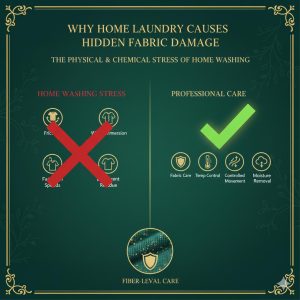
Each time clothes go through a home washing machine, the fabric is put under physical and chemical stress:
- Rubbing and friction occur as garments twist against each other and the drum, gradually wearing down fibres.
- Long periods of water immersion cause fibres to swell, weaken, and lose their original structure.
- Detergent and chemical residue can remain trapped inside the fabric, especially when too much detergent is used.
- Fast spin speeds stretch and pull fibres, which is especially damaging for cotton, wool, and blended fabrics.
Over time, these stresses cause clear changes in how clothes behave:
- Fibres become thinner and weaker
- Fabrics lose their stretch and no longer hold their shape
- Colours fade as dye is slowly stripped away
- Materials begin to trap moisture instead of releasing it
These changes explain why clothes may still look clean but feel stiff, smell damp when worn, or wear out much sooner than expected.
Because this damage occurs gradually, most families do not associate it with home washing until the clothes are already close to wearing out.
A Common Hampstead Household Experience
This situation is common in many Hampstead households and typically unfolds slowly, with no one noticing the pattern at first.
A parent notices their child’s school uniform smells perfectly fine when it comes out of the washing machine. It feels dry, looks clean, and seems ready to wear. However, after just a few hours at school, an unpleasant smell starts to develop. Most parents naturally assume this is caused by sweat, playground activity, or a long school day.
That evening, the uniform goes straight back into the washing machine.
At first, this feels logical. If something smells, rewashing it should fix the problem. But this is where the cycle begins.
After a few weeks, clear changes appear:
- The uniform needs washing more frequently, sometimes after only one wear
- The fabric starts to feel rougher and less flexible
- The smell returns more quickly, even after a fresh wash
What is actually happening is not dirt buildup, but damage within the fabric. Repeated home washing weakens the fibres and makes it harder for moisture to escape. As a result, small amounts of humidity remain trapped deep within the material, creating an ideal environment for bacteria to survive and multiply during the day.
At this stage, most families blame the detergent, the local water quality, or the uniform brand. Very rarely do they consider that the washing process—repeated cycles, high spin speeds, and excessive detergent—may be causing the issue.
The truth is simple but essential: repeated home washing often creates the conditions for odour and wear rather than solving them.
Why Rewashing Makes Smells and Wear Worse
 Most clothing odours are not caused by dirt. In many cases, they are caused by trapped moisture that remains inside the fabric even after washing and drying.
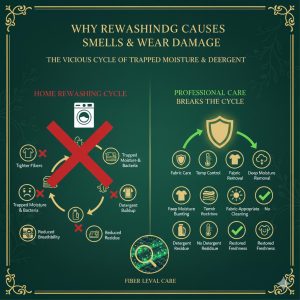
Repeated home washing gradually changes the fabric’s structure. Fibres become tighter, rougher, and less water-releasing. Instead of entirely evaporating, moisture remains trapped deep within the material, especially in thicker areas such as seams, cuffs, waistbands, and collars.
With repeated home washing:
- Moisture becomes harder to remove because damaged fibres no longer open and close properly
- Bacteria survive deep in the fibres, protected from heat and detergent
- Detergent builds up inside the fabric, creating a sticky layer that holds moisture
- Clothes lose their ability to breathe, meaning air cannot circulate through the fibres.
This combination creates the perfect conditions for odour. Clothes may smell neutral when dry because bacteria are inactive. Once the garment is worn and warmed against the body, trapped moisture and bacteria reactivate, and the odour returns.
Using hotter water or more detergent does not fix this problem. Higher heat can further damage fibres, while additional detergent can increase residue buildup. Instead of removing the cause, these actions often push moisture and chemicals deeper into the fabric, making odours return faster and more strongly over time.
Why More Hampstead Families Choose Professional Laundry
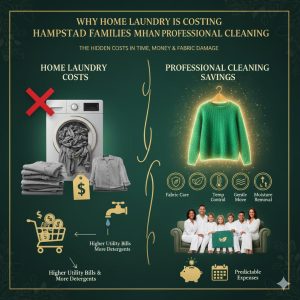 Because of ongoing frustrations and rising home laundry costs for Hampstead families, it is becoming harder to ignore; many households are rethinking how they handle laundry and questioning habits they once took for granted.
Instead of relying solely on home washing machines, families are choosing professional laundry services for key items such as school uniforms, bedding, towels, and frequently worn clothing. These are the items that suffer the most from repeated washing and are the first to show signs of wear, stiffness, and odour.
Professional laundry works differently from home washing. It does not rely on guesswork, fixed programmes, or one‑size‑fits‑all settings. Instead, garments are cleaned at controlled temperatures, with fabric‑appropriate detergents, and with carefully managed movement that reduces fibre stress. Moisture is removed gradually rather than forced out at high speed, which helps fabrics recover their shape and release trapped water.
As a result, professional laundry does more than make clothes look clean. It directly addresses the underlying causes of odour, premature wear, and fabric damage, breaking the cycle of constant home rewashing that many families experience.
Washing Clothes vs Caring for Them
Home washing focuses on one main goal: making clothes look clean on the surface. If stains are gone and the fabric smells neutral when it comes out of the machine, the wash is considered successful—even if the fabric is slowly being damaged.
Professional laundry focuses on something more profound: keeping fabrics healthy, so they last longer, feel better, and perform as intended when worn.
This difference matters because fabric health affects everything — softness, breathability, shape, colour, and how well moisture can escape.
Professional laundry care includes:
- Choosing the right temperature for each fabric, so fibres are cleaned without shrinking, weakening, or setting odours into the material
- Using controlled movement instead of harsh spinning, which reduces friction and prevents fibres from being stretched, twisted, or broken
- Selecting detergents based on fabric type, not habit, so residue does not build up inside the cloth.
- Removing moisture gradually, allowing fibres to relax and release trapped water instead of forcing it out at high speed
- Checking garments individually, so heavily worn areas like collars, seams, and cuffs receive the right level of care.
This level of precision and control is not possible in a standard household washing machine, which uses fixed programmes designed for convenience rather than long-term fabric care.
Why Home Laundry Is Costing Hampstead Families More Over Time
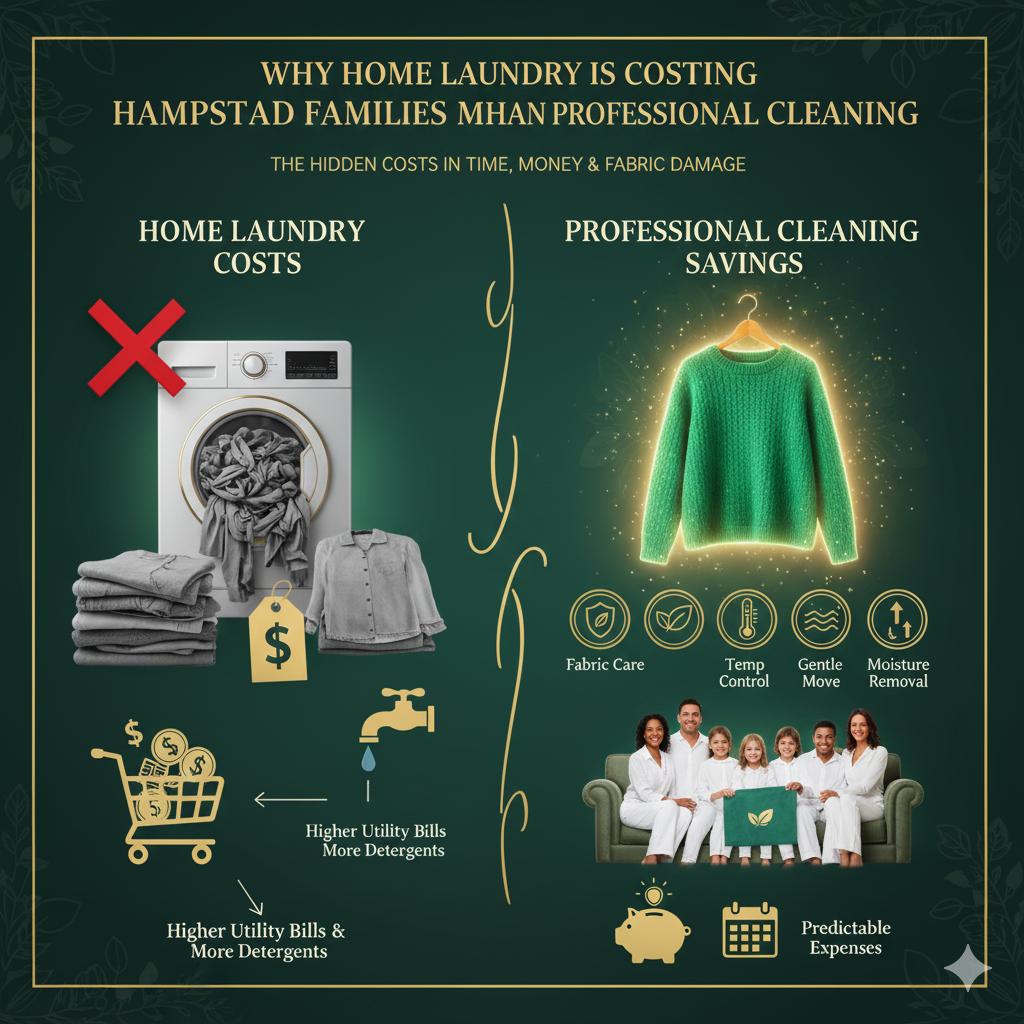
Many families believe professional laundry costs more because they only compare the price of a single wash. This assumption is a primary reason why home laundry costs Hampstead families more over the long term. What often goes unnoticed is the long‑term cost of washing everything at home, week after week, year after year.
Home laundry creates a series of hidden expenses that rarely appear on a single receipt but quietly add up over time:
- Replacing clothes sooner than expected because fabrics weaken, fade, and lose shape faster with repeated home washing
- Buying extra school uniforms to cope with frequent washing, shrinking, or lingering odours
- Replace bedding more often as sheets and towels lose softness, absorbency, and freshness
- Higher electricity and water bills from running multiple wash and dry cycles each week
- Spending more on detergents and additives, including stain removers, fabric softeners, and odour treatments that only offer short‑term results
For families with children, these costs increase quickly. School uniforms, sports kits, and everyday clothing are washed more often than adult garments, accelerating wear and rising replacement costs throughout the year.
Professional laundry changes this pattern. By cleaning garments more effectively in fewer cycles and protecting the fabric structure, it reduces the need for frequent rewashes and delays replacement. Over time, this leads to lower overall household spending — even if the cost of a single professional wash appears higher at first glance.
In simple terms, professional laundry shifts families from recurring short‑term costs to longer‑lasting clothing and more predictable expenses.
Why Home Laundry Is Costing Hampstead Families More Through Common Habits
Some everyday laundry habits seem harmless, but over time, they slowly and consistently damage clothing. Because damage occurs gradually, most families do not notice it until garments feel rough, misshapen, or permanently worn.
Try to avoid the following habits — and understand why they matter:
- Very high spin speeds for daily clothing
High spin speeds aggressively pull and stretch fabric. This repeated tension weakens fibres, especially in cotton, wool, and blended fabrics, causing clothes to lose shape and wear out faster. - Overloading the washing machine
When too many items are packed into a single wash cycle, garments rub against one another excessively. Detergent and water cannot circulate properly, resulting in uneven cleaning, trapped residue, and increased frictional damage. - Mixing heavy items with delicate fabrics
Towels, jeans, and hoodies are much heavier when wet. When washed together with lighter items, they act like weights, pulling and rubbing against delicate fabrics and causing thinning, stretching, and surface damage. - Adding extra detergent to fix smells
Using more detergent than necessary does not clean better. Excess detergent often remains trapped in fibres, where it retains moisture and feeds bacteria, causing odours to return faster rather than disappear. - Assuming a “gentle” cycle always protects fabric.
Many gentle cycles still use long wash times and intense spinning. Without the right temperature, detergent, and load size, even a gentle programme can slowly damage fibres.
Over time, these habits weaken fabric structure, trap moisture, and shorten clothing’s lifespan — even when garments appear clean on the surface.
Small Changes That Make a Big Difference
Families can improve results by making a few practical changes — and understanding why each one matters:
- Sorting laundry by fabric type
Different fabrics behave very differently in water. Cotton, synthetics, wool, and blended materials absorb moisture, respond to heat, and tolerate movement differently. Sorting by fabric type reduces friction, prevents heavier items from damaging lighter ones, and helps wash conditions better match the material. - Washing items only when needed
Not every garment needs washing after a single wear. Overwashing is a leading cause of early fabric damage. Washing less often reduces fibre stress, slows colour fading, and gives clothes time to fully dry and recover between wears. - Letting clothes dry thoroughly between wears
Wearing clothes that are not completely dry — even if they feel dry on the surface — allows moisture to remain trapped inside the fibres. Giving garments enough time to air out fully helps moisture escape and reduces the chance of odour returning. - Using professional laundry for valuable garments
Items such as school uniforms, bedding, workwear, and delicate fabrics benefit most from professional care. These garments are washed frequently and experience the most stress, so controlled cleaning helps them last longer and stay comfortable. - Treating odour as a moisture issue, not dirt
Odour usually means moisture is trapped inside the fabric, not that the garment is dirty. Addressing moisture through proper drying and fabric‑appropriate cleaning is far more effective than rewashing with extra detergent.
Minor adjustments like these reduce unnecessary wear, improve freshness, and can significantly extend clothing’s lifespan.
Pickup & Delivery That Fits Hampstead Life
Time is one of the most valuable resources for busy families, and laundry quietly consumes more of it than most people realise. Sorting clothes, loading machines, waiting for cycles to finish, transferring items to dryers, and folding everything back into cupboards can easily take several hours each week.
Professional pickup and delivery removes this hidden time burden by taking the entire process out of the household routine:
- No carrying heavy laundry bags, which is especially helpful for families without lifts, limited storage space, or busy travel schedules
- No waiting for machines, reloading cycles, or planning evenings around wash times
- No planning wash days or squeezing laundry in between school runs, work calls, and family commitments
- No guessing settings, temperatures, spin speeds, or detergent amounts for different fabrics
Instead, laundry is collected directly from your home, cleaned professionally using fabric‑appropriate methods, and returned ready to wear. This allows families to reclaim time for rest, family activities, and daily routines while knowing their clothing is being adequately cared for.
Why Children’s Clothes Benefit the Most
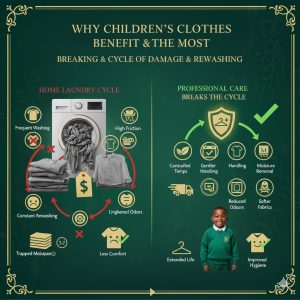 Children’s clothing is washed more often than any other type of clothing in the home, making it more susceptible to damage.
Children are active. They run, sit on the floor, sweat more during play, and change clothes more frequently. As a result, school uniforms, sports kits, and everyday garments are often washed after just one wear — sometimes even after a few hours.
This leads to a damaging cycle:
- Frequent washing, which puts repeated stress on the same garments
- High friction, as clothes are constantly rubbed, spun, and twisted in the machine
- Constant rewashing, especially when odours return quickly
Because children’s clothes are usually made from durable but affordable fabrics, they are not designed to withstand this level of repeated mechanical stress. Over time, fibres weaken, fabrics lose softness, and moisture becomes more easily trapped.
Professional laundry helps break this cycle by cleaning children’s clothing more effectively in fewer washes. Controlled temperatures, gentler handling, and proper moisture removal allow fabrics to recover rather than break down.
As a result:
- Clothes last longer and hold their shape
- Odours are reduced because moisture is removed correctly
- Fabrics stay softer and more comfortable against the skin
- Hygiene is improved without over‑washing
This is especially important for school uniforms and sportswear, which are worn close to the body, washed frequently, and expected to stay comfortable, fresh, and presentable throughout the school week.
When Professional Laundry Makes the Biggest Impact
Professional laundry makes the most significant difference with items that are washed often, worn close to the body, or made from fabrics that are sensitive to heat, friction, and moisture. These items experience the highest level of stress in home washing machines, which is why issues appear more quickly.
Families notice the most considerable improvement with:
- School uniforms
Uniforms are worn for long hours and washed frequently, sometimes daily. Home washing quickly weakens the fabric, traps odours, and causes stiffness. Professional laundry reduces rewashing and helps uniforms stay fresher, softer, and presentable for longer. - Sportswear
Sports clothing absorbs sweat and moisture deeply. Domestic washing often fails to remove this moisture entirely, resulting in lingering odours. Professional cleaning focuses on proper moisture removal, which is key to keeping sportswear hygienic and odour-free. - Bedding and towels
These items hold large amounts of water and are often overloaded in home machines. This leads to poor rinsing, trapped detergent, and rough textures. Professional laundry cleans them thoroughly while preserving softness and absorbency. - Delicate items
High spin speeds and heavy loads easily damage delicate fabrics. Professional care uses gentler movement and fabric-appropriate conditions to prevent stretching, thinning, and shape loss. - Every day, frequently wear clothes.
Items worn several times a week are exposed to repeated washing stress. Professional laundry reduces fibre fatigue, helping everyday clothing maintain comfort, fit, and appearance.
These are the items most affected by home washing because they combine frequent use with repeated exposure to friction, moisture, and aggressive spin cycles.
Why Home Laundry Is Costing Hampstead Families More — And How to Stop the Rewashing Cycle
If clothes never feel truly fresh, the problem is usually not a lack of cleanliness — it is the same core issue that makes home laundry cost Hampstead families more than professional care. It is the washing method itself. When fabrics are repeatedly exposed to high friction, excess detergent, and aggressive spinning, they slowly lose their ability to release moisture and recover their original structure.
This is why rewashing rarely solves the issue. Each additional wash may remove surface odour for a short time, but it also adds more stress to the fibres, making the next problem appear sooner. Over time, families become stuck in a loop of washing, rewashing, and replacing clothes.
Professional laundry breaks this cycle by addressing the root causes rather than the symptoms. Fabrics are cleaned using controlled conditions that reduce fibre damage, remove moisture more effectively, and prevent detergent buildup. When garments are adequately cared for, they stay fresh longer and require fewer washes overall.
In practical terms, professional laundry saves time by eliminating repeated wash cycles, protects fabrics by extending their usable life, and delivers consistent results that home washing cannot achieve—especially for busy families managing school uniforms, bedding, and everyday clothing.
Book Professional Laundry in Hampstead
If you recognise these patterns in your own home, it may be time to change the method rather than wash harder.
Professional laundry with pickup & delivery helps Hampstead families:
- Reduce rewashing and fabric damage
- Keep clothes fresher for longer
- Extend the life of school uniforms, bedding, and everyday clothing
- Save time every week
👉 Book a professional laundry collection in Hampstead
👉 Request a quote for pickup & delivery
A smarter laundry routine protects your clothes, your time, and your household budget.



No comment